There’s a common perception that moving systems and data into the cloud, and additionally leveraging AI on that data are the domain of the “large shops”, bigger companies with bigger budgets to spend. Let’s address each of those assumptions separately :
Assumption : Only bigger organizations will benefit from moving to the cloud
Reality : Moving to the cloud provides any sized system with enhanced uptime, reduced maintenance costs, better security and more connectivity.
I’ve seen this often enough. There’s a closet somewhere in your office with a hulking tower PC “server” in there, hooked up to 15 inch flat panel display that cost a small fortune in 2001, groaning away at mostly blowing hot air over the mop bucket parked along side it.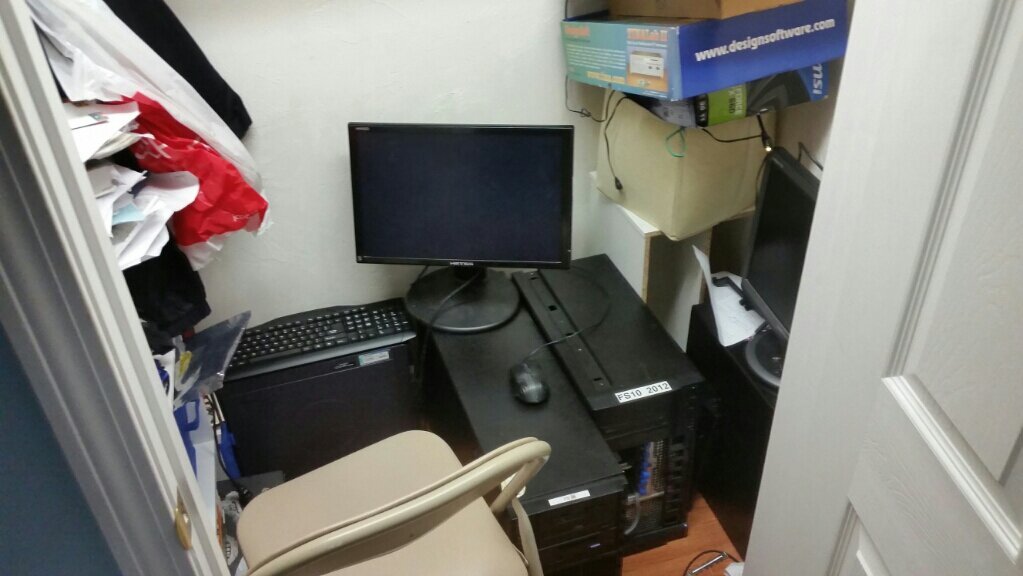
I get the argument, it’s cheap and it works. Well, since it cost all of $50 plus half a leftover pizza on Craigslist, I certainly can’t argue the cheap point, but let’s assess what you get for your money.
Let’s assume that you have the server for a reason. Maybe it runs your till, or houses the accounting software database, holds all the client contracts that have been scanned to PDF, or most importantly runs the bootleg copy of Minecraft that keeps your daughter occupied when she comes to work with you. Suffice it to say that there’s some reason for it to exist, and that reason is probably important enough that if it were to go down, you’d have a bad time.

“But it works,” you say. “It’s worked for years, and it just sits there and runs.” Is that really true? And is that by design or by luck? Is it at all locked down? Does it have a password that isn’t the office phone number (or any password at all)? When was the last time the server OS was updated or patched for vulnerabilities? Antivirus? Firewall? Backups – sometimes? Maybe never? What’s that awful screeching noise it makes every other day for 20 minutes? Did it just happen 2 days in a row now? What if someone pried open the back door with a crowbar and made off with it? What about a fire or even a flood or hurricane?
Point is, there are a lot of possible ways you could loose your server, and just because you haven’t, doesn’t mean you won’t. What’s the real cost to your business to have it go down? Lost productivity? Would you still be able to function? What about the liability of customer information now out there in someone else’s hands? Can you really afford this?
Let’s look at a typical scenario and compare costs vs. benefits.
Scenario A. Let’s say you buy a mid-range desktop tower from Best Buy or Costco. This will run you about $800 or so. Oh, and let’s not forget the cost of the OS, which if you want to run Windows server, will cost $841 for 2019 Standard edition. You stick it in the closet, plug it into the switch, and after you load whatever software you need on it, you forget about it. For about 6 months, then the latest scare on Fox News prompts you to go buy Norton or some other antivirus for $50 and subscribe to Carbonite for an online backup to the tune of $50 a month.
Scenario B. You set up a virtual machine in Azure for your file server. A fairly standard D2s_v3 image running Windows 2016 has an estimated cost of about $72 a month. This would roughly be a like-for-like replacement for your regular closet denizen. Ideally, your router is up to creating a virtual bridge to the Azure network, but there are other ways to get at the virtual server from your local machines.
Scenario C. Let’s say you primarily use the server for file storage and sharing. You can use Azure File Sync to move files to and from an Azure Storage Account for even cheaper. It works just like a mapped drive, only it’s secure, encrypted, redundant, and automatically backed up.
| Scenario A | Scenario B | Scenario C | |
| Total Up-front Cost | $1,691 | $0 | $0 |
| Monthly Recurring Cost | $50 | $72 | $22 |
| Amortized Cost over 36 months | $96.97/mo | $72/mo | $22/mo |
| Redundant Hardware | no | yes | yes |
| Distributed data backup | no | optional | yes |
| Managed OS Updates | no | no | n/a |
| Managed Security | no | no | yes |
Not only is the server in the closet more expensive when averaged over 3 years (you’d actually have to average over 6 years to get cheaper), you get far less for your money.
At this rate, it absolutely makes no sense at all to do the “cheap” solution, when you can get the added benefits, reliability, and redundancy of using a manged service for less money.
 Elevated Technology Consulting